
The recent sell-off in IT stocks such as Infosys and Tata Consultancy Services (TCS) has resulted in a sharp decline in the IT sector weighting in the Nifty50 index. The sector's weighting in the index has slipped to a five-year low of 12.2 per cent, down from the 17.7 per cent at the end of March 2022. The top IT companies - TCS, Infosys, Wipro, HCL Technologies, and Tech Mahindra - accounted for 13.6 per cent of the index at the end of March this year.

Bankers said high interest rate could make Indian economy sluggish given that inflation is around 5%

The headline for corporate profit growth has been very encouraging in the July-September quarter (Q2) of 2023-24 (FY24), with the combined net profit of listed companies up by 38 per cent year-on-year. However, the earnings distribution has been very lopsided, with most of the growth coming from public-sector oil-marketing companies (OMCs), banks, non-bank lenders, automobile (auto) companies, and cement producers. By comparison, companies from information technology services, fast-moving consumer goods (FMCG), retail, and consumer durables were disappointed, experiencing a sharp slowdown in net sales growth and a relatively muted increase in reported net profit.

Broader markets underperformed indices with BSE Midcap down 0.43% while the Smallcap index fell 0.07%.

But lower growth numbers in the quarters to come may not mean renewed weakness in the economy at the ground level, says Pranjul Bhandari.

The finance minister did very well for equity market investors but not so with families, reveals Mahesh Vyas.

The rupee appreciated 7 paise to 79.74 against the US dollar in early trade on Thursday as a positive trend in domestic equities supported the local unit. However, a strong American currency overseas and forex outflows restricted the rupee's gain, dealers said. At the interbank foreign exchange, the rupee opened at 79.72 against the American dollar, then went lower to trade at 79.74 against the greenback in early deals, registering a gain of 7 paise over the last close.

Inflation indexed bonds assure a positive return over inflation.

The "asset-right" strategy, reiterated by ITC chairman Sanjiv Puri during the company's 112th annual general meeting (AGM) on August 11, received a thumbs up from the analysts. They, however, believe that sustained earnings growth and synergies with the demerged hotel's vertical will help the stock break out from the ongoing consolidation. "The stock is expected to consolidate between Rs 420 and Rs 450 in the near future.

In the current fiscal so far, retail inflation stabilised around 5 per cent, while wholesale price-based inflation averaged around 2.9 per cent during April-December.

The third-quarter financials didn't excite market watchers. But equity investors can still make money if they invest in the right stocks.
Markets surged in late trades to snap five-day losing streak led by bank shares.

Clouding the inflation outlook is the recommendation of the 7th pay panel for an average 24 per cent pay hike for millions of its employees, which would lift demand-driven price pressures.

Though inflation, on the basis of the wholesale price index, is nowhere near the 1990-91 level of 10.26 per cent and India is in a much better position to check it, the greater integration of our economy with the globe has exposed it to a much higher risk of imported inflation.

After unseasonal rains, supply disruptions and pandemic-induced woes pushed retail inflation well over the Reserve Bank's comfort zone in 2020, the scenario is likely to stay that way at least in the short term as economic recovery slowly gains foothold. For most part of this year, pricier food items pushed the retail inflation, based on Consumer Price Index (CPI), higher in the range of 6.58-7.61 per cent, except for March when the reading was 5.91 per cent. Experts believe retail inflation is likely to average around 6.3 per cent this fiscal and mostly will remain sticky going forward owing to pick-up in demand across sectors.
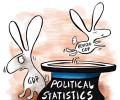
It is also likely to assume a deflator of around 4 per cent. That could take the nominal GDP outlook for FY21 to around 10 per cent. It is this nominal GDP forecast on the basis of which the finance ministry is calculating key Budget targets like the fiscal deficit as a percentage of GDP and tax revenue growth for the coming year.

On one hand, Operation Greens should help to smoothen volatility in the prices of vegetables, whereas the proposal to enhance and extend minimum support prices to augment farmer incomes, may emerge as an inflation risk.

The Indian real estate consumer is still in the wait and watch mode.

Food prices probably fueled a sharp rise in India's retail inflation in December after the record low struck the previous month.

If rate cuts are fully transmitted, and RBI continues to cut rates in 2016, and earnings growth picks up as well, current valuations may be justified. Otherwise, equity will remain over-valued, says Devangshu Datta.
CPI inflation slowed to 9.39% in April compared with 10.39% in March.
Market participants must appreciate that staying cautious is a virtue for central bankers and should not expect a sudden reversal in the formal monetary policy stance.

What differentiates Rajan from his predecessors is his proactive steps in anticipating a problem and coming up with out-of-the-box solutions

As inflation rate is near the upper limit of the comfort zone, experts rule out rate cuts anytime soon

Raghuram Rajan said the passage of the GST Bill augurs well for the growing political consensus for economic reforms.
Keeping pace with the rapidly changing income and consumption pattern, the government will soon come out with a new Index of Industrial Production (IIP) and develop indices for measuring growth of SSI sector and calculating consumer prices in urban areas.

The Reserve Bank remains laser-focused to bring back retail inflation to 4 per cent over a period of time in a non-disruptive manner, Governor Shaktikanta Das stressed while voting for status quo in interest rates, as per minutes of the October policy meeting released on Friday. The central bank has been mandated by the government to ensure the Consumer Price Index (CPI) based inflation is at 4 per cent, with a band of 2 per cent on either side. The retail inflation, which was above 6 per cent during May and June, has started moving down and stood at 4.35 per cent in September.

'If there is an RBI majority in the committee, there is no question of a veto.'

Govt likely to get full control on policy rate.

Food and fuel are two perennial areas of concern.

Treat silver as part of the procyclical or growth assets in your portfolio, advises Sanjay Kumar Singh.

The survey showed firms' confidence regarding future business grew at the slowest pace in a year last month.

With inflation figures expected to be well within RBI's target, there may be room for further rate cut.

The 30-share Sensex ended down 159 points at 27,425 and the 50-share Nifty closed down 24 points at 8,299.

From the Sensex pack, IndusInd Bank, NTPC, Asian Paints, Hindustan Unilever, JSW Steel, Tech Mahindra, Bajaj Finance, Infosys, Wipro, ICICI Bank, Bajaj Finserv, HDFC Bank and Tata Motors were among the major laggards. HCL Technologies, Power Grid, Titan, Reliance Industries, UltraTech Cement, Tata Steel, State Bank of India and Mahindra & Mahindra were the gainers.
.jpg)
During April-February, the index of industrial production, a measure of factory activity, declined 0.1 per cent compared with a 0.9 per cent growth in the corresponding period of 2012-13.

The S&P BSE Realty Index has emerged as one of the top-performing sectors, yielding a remarkable 45 per cent return over the past six months. The three leading players, listed by market capitalisation, have substantially enriched investor wealth by 43-70 per cent during this period. If the second quarter (Q2) of 2023-24 (FY24) updates from Macrotech Developers (Lodha) and Sobha, along with industry data for the quarter, serve as any indication, the trend of strong bookings for larger players is expected to continue.

In a recent article, Rajan has ridiculed critics of the exchange rate policy.

Services sector activities improved further and touched a five-month high in April driven by a surge in incoming new work orders that boosted business activity and supported a renewed increase in employment, according to a survey. The seasonally adjusted S&P Global India Services PMI Business Activity Index jumped to 57.9 in April, from 53.6 in March, highlighting a sharp rate of expansion that was the fastest since last November amid mounting price pressures. For the ninth straight month, the services sector witnessed an expansion in output.

Millions of central government employees were taken for a ride on April Fool's Day.
 © 2026 Rediff.com - Advertise with us - Disclaimer - Privacy Policy - Sitemap - Feedback - About us - Terms of use - Grievances